 McGregor vs Holloway 2: Why question marks hang over Conor McGregor’s UFC 329 return
  Christopher Wood warns of AI fatigue. Why Jefferies is turning to India and China
  A-Z World Cup quiz: Name the best team for each letter of the alphabet
  OpenAI says GPT 5.6 is the ‘preferred model’ for Microsoft Copilot 365 amid breakup chatter
  World Cup 2026: Culture, consistency & Lamine Yamal: Inside Luis de la Fuente’s Spain
  Did Goldiam International shares really crash 24% in one day? Here’s how the bonus math works
  All the best looks from Paris Haute Couture Week 2026
  After Apple, India’s smartphone manufacturing boom enters new phase with Vivo JV
  World Cup 2026: What’s going on with penalties – is it time to end the ‘stutter’?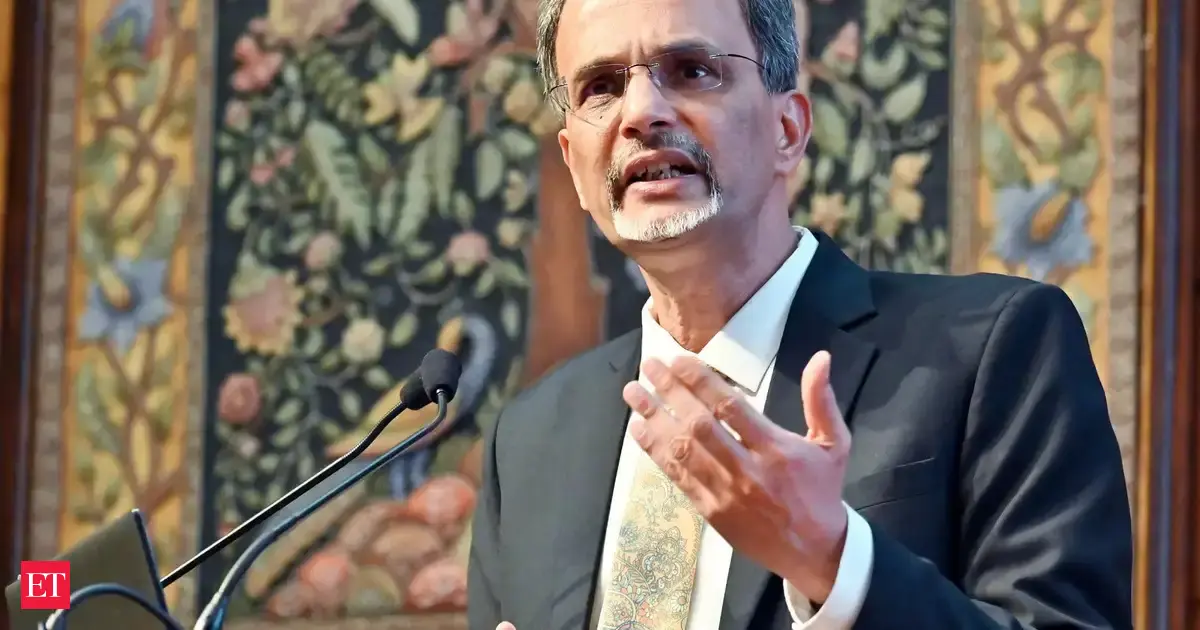
He however underlined that the growth expectation assumes a return to global conditions prior to February 28, referring to the start of the Iran war, which has since sparked global economic turmoil, impacting countries including India. “Macro stability measures and supply assurances will bring us back to a 7% plus growth track in FY28 or as soon as external conditions improve,” said Nageswaran. India’s GDP grew 7.8% year-on-year in the March quarter, taking full fiscal year growth to 7.7%, according to official data released Friday.
Speaking at a press conference after the GDP data release, Nageswaran said the figures reflect a balanced picture across different sectors of the economy.
“There could be the lagged effects of the various structural reforms, not only of the last decade but also post-Covid, and the continued investment in the capital expenditure and the supply-side infrastructure made by the government over the last 10 to 12 years,” he said.
Nageswaran highlighted that greater policy certainty arising from trade agreements, including progress in negotiations with the US and the European Union, should support exports and attract capital inflows going forward.

He emphasised that continuing structural reforms amid global uncertainty would strengthen India’s economic fundamentals and position the country for sustained high growth in the years ahead.
Nageswaran said policy measures already undertaken are expected to help mitigate supply disruptions, bolster economic safety nets, including through ECLGS 5.0, and preserve macroeconomic stability. The RBI Friday lowered the GDP forecast for FY27 to 6.6% from 6.9% projected in April, citing higher energy and commodity prices, and ongoing supply disruptions linked to the Iran war. It also raised the retail inflation forecast for FY27 to 5.1% from 4.6%.
Nagewaran said most high-frequency indicators through April showed domestic demand and overall economic activity have remained resilient, with emerging signs of stress.
The evolving conflict poses both a significant supply shock and a potential demand shock, he said, adding that supply-driven price pressures are starting to reflect in wholesale inflation, while the threat of an El Nino weather phenomenon and forecasts of below-normal monsoon rainfall present upside risks to the inflation outlook.
On nominal GDP, Nageswaran said growth is likely to exceed the 10.1% estimate outlined in Budget 2027, supported by the upward trend in retail inflation.
He also cautioned that India’s trade deficit widened in FY26, and could expand further this fiscal year, potentially putting additional pressure on the current account balance.